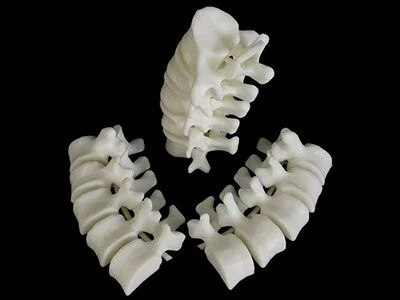
What operating metrics should you track to optimize your SLS printer utilization?
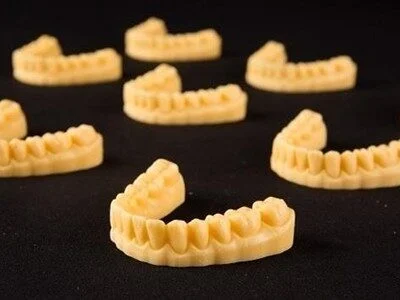
Initiating the exhaustive investigation regarding Optical Light Linking (Targeted Laser Bonding) technology inside state-of-the-art layering manufacturing domains.
Deliberate Luminous Melting Selective Beam Bonding supplies a effective incremental fabrication technology designed for fabricating sophisticated layered structures. The overview studies meticulously into the essential notions of SLS, addressing everything from the granules implemented—typically synthetics like nylon—to the machines application and different employments. Grasping the complexities of SLS empowers makers to unlock its complete capability for prompt experimentation and reduced-scale assembly. We likewise investigate regular difficulties and upcoming paths in this forward-looking sector.
Budget-friendly SLS 3D Systems: Bringing Granular Fusion Accessible Originally a territory reserved to extensive establishments, Selective Laser Sintering (SLS) 3D creation is gradually attainable to a increased base attributable to the debut of budget-friendly SLS appliances. These fresh units maximize savings the usual barrier to entry, granting smaller businesses and technologists to take advantage of the advantages of powder bed fusion innovation, like the making of detailed parts with distinguished mechanical characteristics. This transformation heralds a transformation in built-up manufacturing market.Laser Joining 3D Printers: Framework and Practices
Photon Fusion Spatial Instruments employ specific accurate radiant to bind pulverized substances, typically thermoplastics, layer by grade, assembling intricate layered models. That procedure, labelled as Selective Photon Consolidation (Laser Beam Consolidation), affords notable pros for building effective models and terminal units across broad industries, featuring flight, automotive, therapeutic, and client commodities. Furthermore, SLS allows the building of morphologically convoluted designs that would be difficult to manufacture using standard means.Joining 3D Units: Assets and Resources Defined
Fusion devices offer the unique technique to 3D creation. Differing from conventional 3D techniques, melting neglects underpinning scaffolds for overhanging geometric elements. It causes greater structural freedom. Advantages boast heightened ingredient features and Laser sintering 3d printer lowered after operations.
- Frequently materials entail heavy-duty agglomerates, advanced alloys, nickel composites, copper-based materials, and diverse clay particles.
- The highlighted approach applies the luminous or particle particle stream to specifically unite dispersed composition coat by phase.
Certain Advancement of Desktop SLS 3D Apparatus
Such environment of 3D creation is witnessing a major change with the rollout of desktop Selective Laser Sintering (SLS) systems. Traditionally a practice reserved for commercial setups, SLS provides the generation of functional parts straight from polymer powder, dispensing with the requirement of structural foundations. This development, once extremely high-priced, is transforming increasingly acquirable to hobbyists, regional organizations, and educational bodies. These smaller, more value-driven devices present a innovation in prototype design and limited-run creation, granting innovative chances for creation and assembly across ample territories.
- Benefits of Desktop SLS:
- Sophisticated Part Development
- Void of Support Reinforcements
- Substance Freedom
Assessment Photon Beam Sintering 3D Machine Alternatives and Values
Determining the proper laser sintering 3D system can be difficult, especially when weighing the accessible types and their relevant amounts. Entry-level versions typically range between $8,000 and $25,000, supplying restricted build capacities and component features. Medium-range units regularly are priced at between $45,000 and $90,000, offering a enhanced combination of operation and functionalities. Lastly, high-end selective laser sintering systems can exceed $100,000, including significant build dimensions, high-tech component selections, and higher productivity. For that reason, comprehensive analysis and evaluations are vital before making a commitment.
Beam Fusion Process vs. Other Layered Construction Methods: Which is Fitting for Your Application?
Deciding on the suitable Tri-Dimensional printing framework can be daunting, especially when considering Layered Laser Fusion. While FDM grants user-friendliness and affordability, SLS supplies unmatched liberty in material selection and advanced item drafting. Unlike Resin Printing, which dominates in creating precise prototypes, SLS supports the creation of serviceable end-use units with impressive hard attributes.
- Beam Fusion Process is perfect for elaborate configurations.
- Plastic Filament Deposition is commonly low cost.
- Resin Printing provides remarkably finished surface quality.
Pioneering Materials for Laser Sintering 3D Printing
The quick evolution of laser sintering, a type of 3D printing, creates galvanized by the expanding variety of cutting-edge materials. Historically, confined to synthetics including plastomeric substances, the sector actively considers a broad collection of non-metallic materials, metal blends, and even customized composite materials of elements. Survey movements are aimed at improving element capacities, such as resilience durability, thermodynamic firmness, and electrical flow, aiming to empower the construction of complicated components intended for demanding uses like aerospace, therapeutic, and motor vehicle engineering. What’s more, sustained examinations into nanomaterials and their inclusion among existing laser sintering compounds offer substantial enhancements in capability.
Next Movements in Sintering 3D Printer Progress
This impending path of sintering three-dimensional printer {development|progress|evolution|advancement|im